|
جاذبههای
گردشگری کرمانشاه بسیار بوده، این شهر با آثار مهم
تاریخی و فرهنگی کشورمان یکی از مهمترین شهرهای
گردشگری ایران است.
In Kermanshah province, there are estimated two
monuments, one of which has been registered as
national monuments and one as global.
In the meantime, twenty of the inscriptions left by
Darius the Shah have been worldwide registered.
There are precious works everywhere in the province.
In this article we will review the tourist
attractions of Kermanshah province and briefly
introduce them.
All of these attractions and sights of Kermanshah
make it worthwhile for any tourist to travel to this
beautiful city and visit the most important tourist
attractions that are valued nationally and globally.
There are many tours that can help tourists visit
the best attractions of Iran in addition to a
comfortable and planned trip.
Taq-e Bostan
One of the most famous tourist sites in Kermanshah,
Taqbistan is a collection of Sassanid period
petroglyphs and inscriptions located northwest of
Kermanshah. The collection is of great artistic and
historical value, consisting of two large and small
arches and several stone sculptures.

What is engraved on the two arches are the
historical scenes of the coronation of Khosrow
Parviz, the coronation of Ardashir II, the
coronation of Shahpour II and III.
The presence of mountains and fountains in this
place has made it a fascinating promenade that has
long been a focus of interest.
This work has been added to the National Heritage
List of Iran on December 23, 2009. The archipelago
was to be listed as a UNESCO World Heritage Site
someday, but grocery stores and nearby houses have
prevented it from doing so and have created many
problems for this important monument.
Bistoon
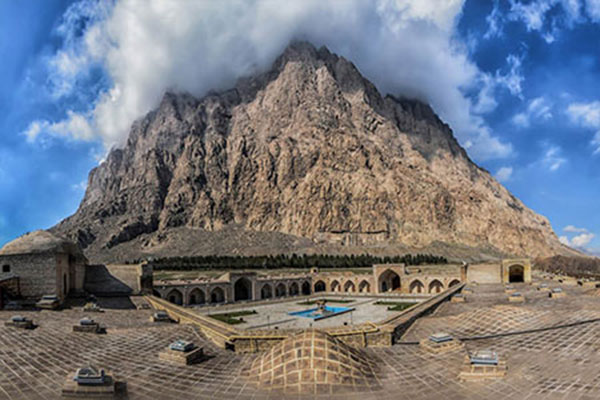
Bistoon Historical Complex is located 2 kilometers
northeast of Kermanshah, southwest of Bistoon and at
the foot of a mountain of the same name on the
Hamedan-Kermanshah route. The sanctity of Mount
Bistoon, the favorable weather conditions and the
location of important roads, such as the Silk Road,
have caused many kings and rulers to pay attention
to the area, and the relics and relics of the
mountain remain intact.

This historic, cultural and natural site has 2
national registered works and more than 3 monuments
have been identified in its privacy. The
inscriptions and prominent figures of Darius are
also listed in the UNESCO World Heritage List in
year 6. This work is related to the Achaemenid
period.
Hercules statue

In the historic grounds of
Bistoon there is another prominent role known as the
statue of Hercules. This work was identified during
the construction of Hamadan Kermanshah Road in 1337
and is related to Parthian period.
Reliance Deputy Governor
Hossein Khan Mu'in al-Rayaa built the support of al-Malik's
deputy in Kermanshah four years ago and was later
completed by Hassan Khan's deputy. The complex
consists of three main sections of Husseiniyah,
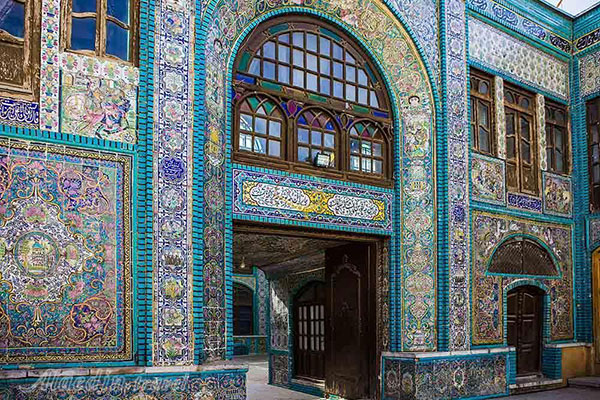
Zainabiyah and Abbasi, and its beautiful tiling is
unique in the world. The colors used in the tiles
are natural and have a certain beauty to it.
Deputy Takl al-Molk hosted the mourners of the
people of Kermanshah. The Zainabiya section was made
for women with two doors. The women used the door at
the upper part of Zainabia when entering. This made
it possible for them to rely on commuting and
attending mourning events without encountering men.
The Husseiniyah and Zaynbiyeh sections were also
designed for mourning men, with unique tiles and
boards. Most of the tiles are also in the Zeinabiya
section. You can also visit museums and anthropology
in the Hosseinah section.
Reliance
Biglar
Bigi

Biglobigi Tie is located in the old texture of
Kermanshah in the old district of Feizabad. This
reliance was made in the time of Qajar. Reliance on
Big Bang has a unique mirror and is unique in this
regard among the city of Kermanshah. On the western
side of the courtyard of the courtyard, a large
mirror hall, known as the Hosseiniyeh, is built.
This hall is decorated with great decorations and
inscriptions related to the era of Mozaffar al-Din
Shah. On the other side of this hall is the spacious
room of the Biglobergi Guesthouse. Kermanshah Museum
of Fine Arts and Literature welcomes visitors and
enthusiasts to rely on the secular Biglobergi as the
Kermanshah Book and Book Museum. Old documents from
the Biglobigi family are also on display at the
museum.
Isaac Wond, Godfather
Isaacvand Rifts are three different rifts located 2
kilometers southwest of Hersin in the cliffs located
northeast of Deh No village. The name of Isaakvand
has been chosen for these wells, given the nearby
village. According to some archaeologists, these
caves are the oldest rocky tombs in Pars and belong
to the Median period.
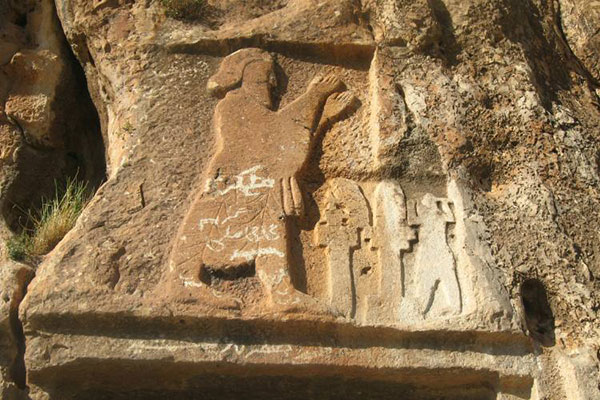
The left and right wings have no ornamentation, but
at the top of the middle watermark there is a
full-length man with a profile. This man is wearing
a long cropped dress and has raised his hands in
prayer. In front of him is a torch and a
firefighter, and a small figure stands behind the
firefighter with his hands high and an object in his
hands.
The Lord of the Rings of
David
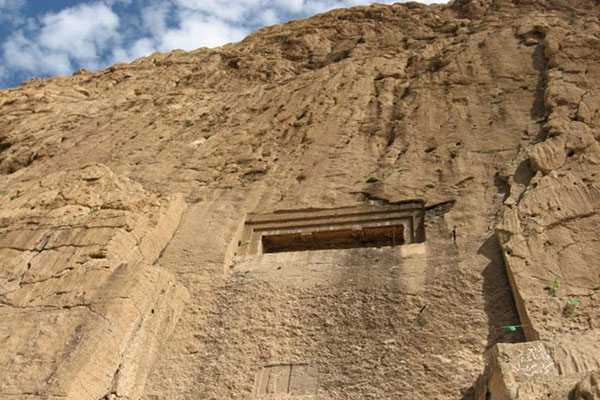
The Dawood Gordofam, located three kilometers
southeast of Sar-e Pol Zahab, is one of the historic
Medieval or Achaemenid sources. The local
inhabitants of Sarpul Zahab also know this spring as
the name of Dawood (Whole Daud). This crypt is dug
in the heart of a large rock and is high above the
ground. Inside the tomb is a urn and an oval grave.
The people of Haq sometimes gather in this area for
religious ceremonies.
Gor
Dakme Sahne

The Scourge or Gourgeon of Darband in the city of
Scene and right of Darband in Kermanshah. Among the
locals, the wolves are known as Kikaus, Farhad Trash
and Shirin and Farhad. These cats include large and
small cats. The path to the scenic creeks, fruit
trees, and forest trees are all well-covered. In the
entrance view of the tomb, the image of the winged
sun is carved.
Given that the type of lathe of both watersheds in
the area is similar to each other, it can be said
that these two crypts were built at the same time.
Anahita Temple

Anahita Temple is one of the largest stone monuments
in Iran, located in Kangavar, Kermanshah. Anahita
was an angel and guardian of water, abundance and
beauty, and the Iranians held her in high esteem.
Anahita Temple is a temple that, like other tall
buildings, derives from the style of seclusion.
Above this monument is a row of stone columns. The
columns of this section are 2.5 m. The Anahita
Temple is attributed to the Parthian or Sassanid
period.
Tag Gra
The Tag Gra or sweet vault is located on the neck of
Kermanshah on the way to Sarpol Zahab. The arch is a
veranda-like space made entirely of stone blocks
that are cut into rectangular cubes. The interior
walls are carved with geometric motifs.

No precise information is available on the date of
its construction and dating, but some attribute it
to the Parthian or Sassanid period. Archaeological
evidence, on the other hand, indicates that it
appears to belong to the late Sassanid period and
the reign of Khosrow II.
The function of the building has not yet been
determined, but different functions have been
described, including: "Caravanserai Memorial,"
King's Rebuilding Stand "," Royal Aria "," Border
Guard "and" Victory Monument ".
To access this work, take the left side road about 4
meters after the checkpoint, and after about 2
meters you will reach the archway.
The tomb of Ahmad bin Isaac
Qomi
Astan Ahmad ibn Ishaq Qomi in the city of Sar-e-Pol
Zahab in Kermanshah is one of the most important
sightseeing sites in the city which is located
almost in the center of the city. The former
building was destroyed during the war; now a
magnificent courtyard has been burned down. The
shrine courtyard is used as a mosque in religious
festivals. There is also a cemetery nearby.

Ahmad ibn Ishaq Ashari Qomi was the lawyer of Imam
Hassan Askari (AS) in Qom. He built a mosque in Qom
at the behest of Imam Hassan Askari in four ways.
Ahmad ibn Ishaq is one of those who has met the
Prophet (PBUH) during the life of his noble father.
Sheikh al-Tusi says: "During the time of the special
Nawabs, there were some trusted and trustworthy
people who were sent with the expectations of the
Holy Prophet. One of them was Ahmad bin Isaac Qum. "
Mountain Park
Mountain Park is located north of Kermanshah, near
the historic site of Taq Bostan. It is one of the
largest and most beautiful tourist parks in
Kermanshah. The beautiful lighting and the two
artificial waterfalls that make up this park give
the park a special beauty.

Bam mountain park is Kermanshah and from this park
you can enjoy the beautiful view of the city. There
is also a cave in the park.
Mirage Scene

The Mirage of the Stage is located in the northern
part of the city and is one of the favorable weather
areas in the city. The beautiful waterfalls, scenic
nature and wonderful climate of this area make many
travelers and tourists to this place a destination.
The scene is a beautiful valley covered with a
variety of lush trees, probably the abode of many
kings of different eras. The source of the cascade
is called the Four Springs, located in the northern
part of the cascade and, in the not too distant
past, formed a small waterfall that is now known as
the arid cascade due to drought. The waters of the
four springs extend their course to the main
waterfall after about 2 meters.
Castle Teapot Cave
Qeyri Qaleh Cave in Kermanshah Province is 2 km from
Kermanshah City and 2 km from Pave. The cave was
created on the slopes of the Shaho Range and within
the limestone minerals, with a crater height of
about 3 meters above sea level.

The cave is now divided into two parts. The first
section, about 3 meters long, consists of two halls
and corridors between them, and lighting from
different angles has made it a beautiful place for
tourism; This part of the cave has many natural
barriers, so only hikers with the necessary
equipment can visit this part of the cave. The most
beautiful spider phenomena are in this part of the
cave and the length of this section is several times
the length of the tourist section.
Prave Cave
Prav cave is the name of a cave in Mount Prav, which
is located 2 kilometers northeast of Kermanshah,
between Taq Bostan and Bistoon. The cave is in the
south of the area called Prav Square, located 2
meters below the peak of Sheikh Alikhan or Prav
peak. Pravo in the local language means full of
water.
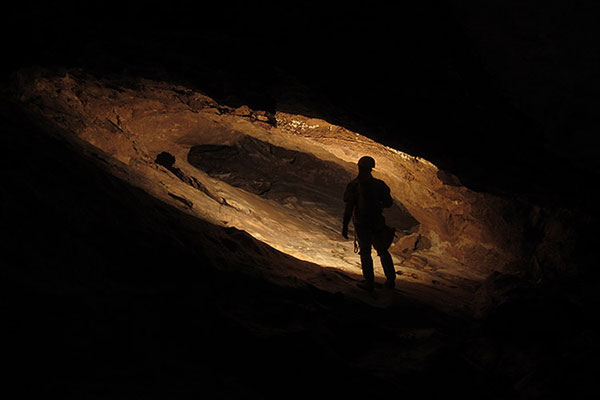
The Prave Cave was discovered 5 years ago. It was
the largest vertical cave in the world at that time,
which is why it was called Everest Caves. The Prav
cave is Kermanshah's second national natural
heritage site, which was registered by the Iranian
Environmental Protection Agency in year 6.
There are now many deep caves found in the world
that are much deeper than the Prava Cave. The Prove
Cave thus ranks # 2 on the list of the world's
deepest caves. One of the unique features of the
Prava Cave is its crater, which is located at an
altitude of 3,000 meters above sea level. It is the
highest level in all the caves in the world.
Lotus head
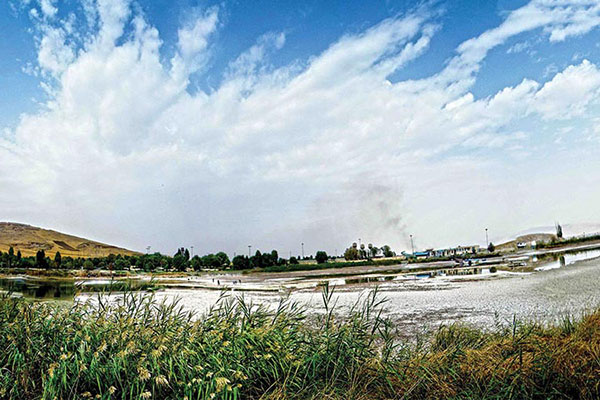
At the top of the lot is a small lake 5 kilometers
northwest of Kermanshah. This lake is full of lotus
flowers and in warm seasons the buds and leaves fill
the water and cover much of it. Around this
waterfront tourism amenities have been built.
Niloofar is the fifty-fifth national natural
heritage listed in the Iranian Natural Heritage List
on March 1.
Hashilan Wetland
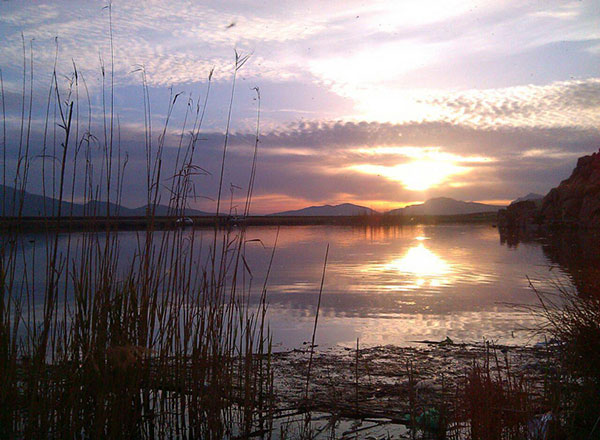
Hashilan Wetland is about 2 kilometers northwest of
Kermanshah. Kermanshah's General Directorate of
Environmental Protection has banned the wetland as a
hunting and shooting area. There are about two small
and large islands in the wetland with an area of
approximately 2 m۱۰۰ to about one hectare, some of
which are hidden under water due to the increase in
wetland discharge in the rainy days. The name of the
lagoon, according to the Kurdish dialect, is
composed of two parts: "hash" meaning snake and "lan"
meaning home. Therefore the name Hashilan means
nesting sites because there are many snakes in this
wetland, especially blue snake and sniper.
flower garden

The Flower Garden, one of the most unique flower
parks in the country, was established in Kermanshah.
The Kermanshah Flower Garden is built on a 6-hectare
land with the ability to cultivate 6,000 plant
species as well as five Iranian, Japanese, French
and Italian flower gardens for citizens to see
spring flowers grow in spring and summer. Of this
area, 6,000 square meters are used for designing
access passages and 6 square meters for designing
fountains. Most of the plants in the garden are
cultivated using first-class Dutch seed in the
garden.
Kermanshah is the second city with flower gardens
after Isfahan. The natural beauty of Kermanshah has
become more apparent after the opening of this
garden. This large and beautiful garden includes
exhibitions of cactus, pond, waterway, seasonal
flowers section, shrubs and various flower species
collected from different countries.
|